
Lumenis Be. announced that it has received Health Canada authorization to offer OptiLIFT and its proprietary Dynamic Muscle Stimulation technology (DMSt) for reducing signs and symptoms of evaporative dry eye disease (DED) and to improve lower lid laxity and blinking mechanism. With this authorization, Lumenis is the first company in Canada to offer a muscle stimulation device cleared for ophthalmic use. OptiLIFT is part of a growing portfolio of innovative technologies from Lumenis, the inventor of OptiLIGHT, its intense pulsed light (IPL) technology authorized by Health Canada for dry eye management.
OptiLIFT is also indicated for non-invasive skin tightening and wrinkle treatment, enabling eye care professionals to provide aesthetic services using the device.
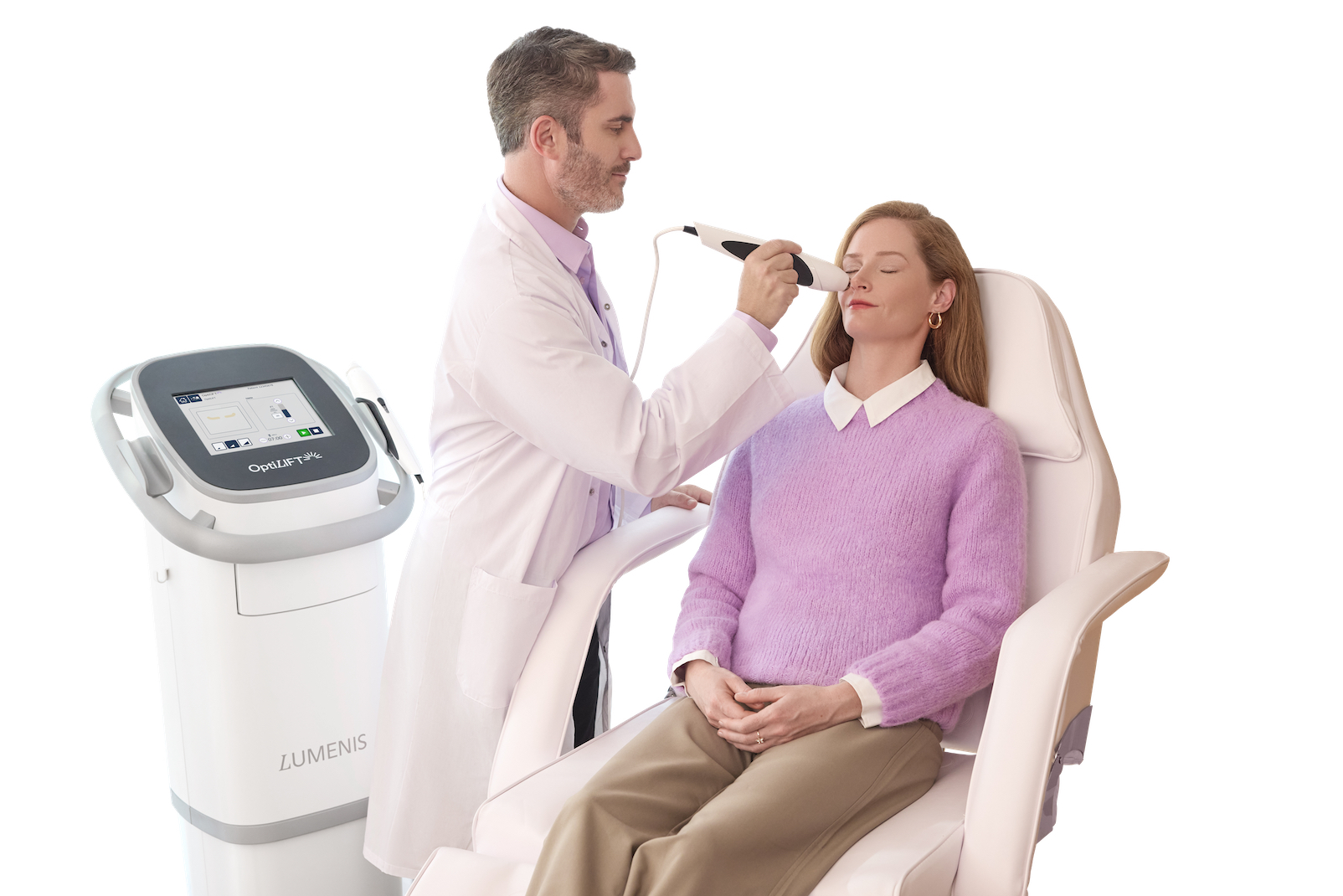
Lower lid laxity is highly prevalent and is associated with the natural aging process, caused in part by the weakening of the orbicularis oculi muscle (OOM).1 Skeletal muscles lose 3-8% mass each decade after age 30.1 Muscle weakening in the periorbital area reduces structural support, which can result in lower lid laxity and incomplete blinking, leading toocular symptoms and aesthetic concerns.2,3,4 One study revealed that more than 60% of dry eye patients suffer from impaired lid closure.5,6
Until now, options for managing lower lid laxity and blinking mechanism have been limited to conservative approaches—such as nighttime ointments, taping, and blinking exercises—or in more severe cases, surgery. By utilizing DMSt to strengthen the periorbital muscle, OptiLIFT addresses a key functional aspect associated with evaporative dry eye symptoms, while providing a proactive, non-surgical approach to improve lower lid laxity and blink quality.
Clinical Evidence and Expert Perspectives
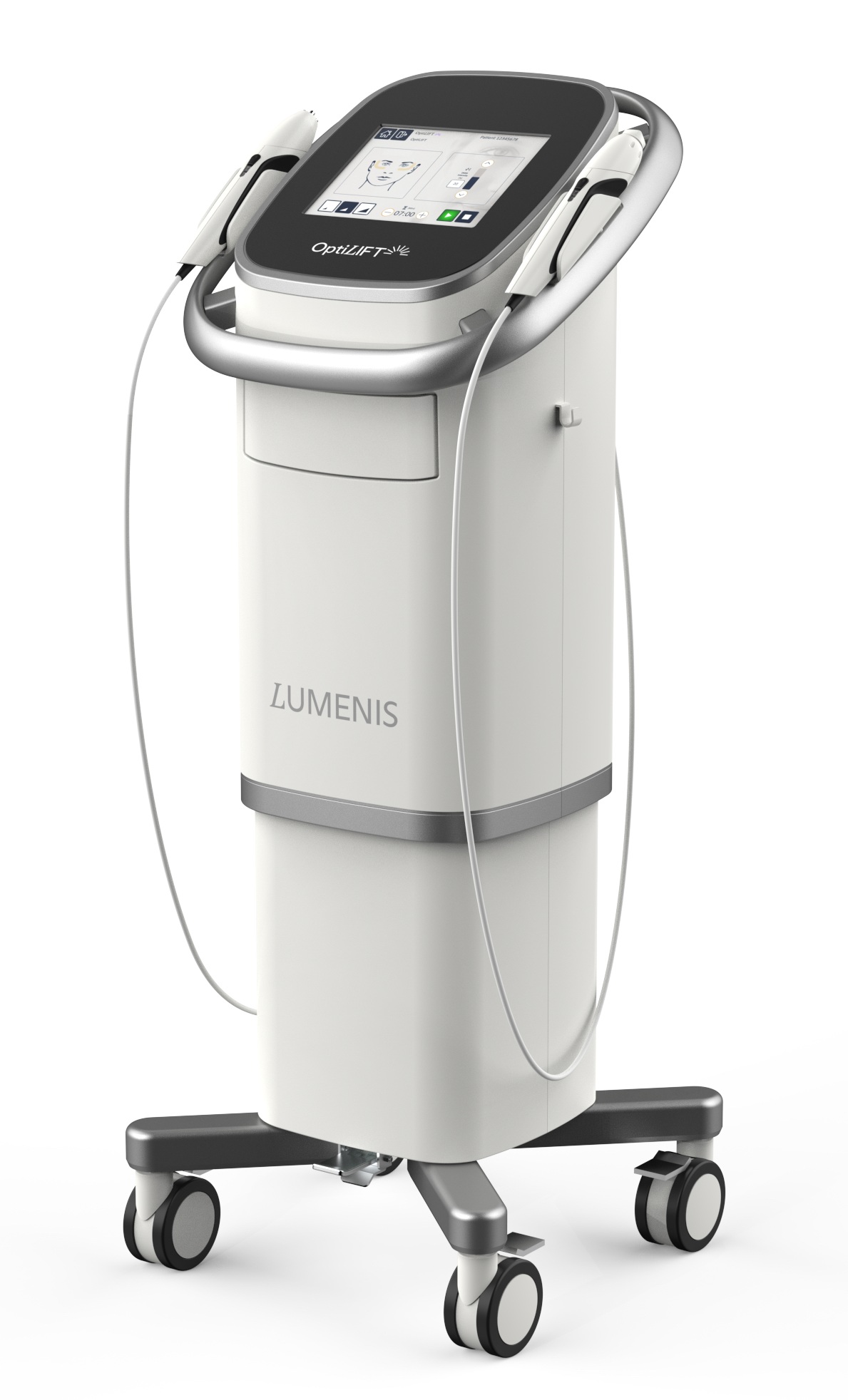 A clinical study published in Clinical Ophthalmology highlights the effectiveness of Lumenis’s proprietary DMSt technology in patients with lower lid laxity and DED.† Led by James Chelnis, MD, FACS, an ophthalmic plastic and reconstructive surgeon at Manhattan Face & Eye,‡ the study demonstrated a reduction in lower lid laxity by at least 75%, an improvement in blinking quality by at least 70%, and a significant 286% increase in tear break-up time (TBUT).7 Patients also experienced a 53% decrease in Ocular Surface Disease Index over the course of treatment, and saw at least 60% improvement in their eyelid appearance.7
“Dry eye disease is inherently multifactorial, and eyelid dynamics—particularly lower lid laxity and blink dysfunction—are frequently underrecognized contributors to tear film instability and ocular surface disease,” said Laura M. Periman, MD, Director of Dry Eye Services and Clinical Research at Periman Eye Institute in Seattle. “There is growing clinical appreciation that supporting periocular muscle function and eyelid apposition may contribute to improving tear distribution and ocular surface health. By enhancing orbicularis tone and blink efficiency, OptiLIFT represents a non-invasive approach to addressing these root biomechanical drivers in patients seeking alternatives to operative intervention.”§
“OptiLIFT addresses a clear gap in care for patients struggling with lower eyelid laxity and impaired blinking, and we’re proud to bring this advanced technology to patients and practices in Canada,” said Itay Mayer, Chief Commercial Officer, Lumenis. “For 60 years, Lumenis has been at the forefront of innovation, and we continue to partner with eye care professionals to expand what’s possible. By combining patented technology with proven clinical outcomes, OptiLIFT is helping to redefine dry eye treatment and elevate the standard of care.”
For more information about OptiLIFT, please visit https://information.lumenis.com/optilift.
# # #
† Lumenis Be. Ltd sponsored the clinical study.
‡ The study investigator, Dr. James Chelnis, also serves as a consultant for Lumenis Be. Ltd.
§ This testimonial represents a specific experience of a paid spokesperson. Experience of others may vary.
1 Volpi E, Nazemi R, Fujita, S. Muscle tissue changes with aging. Current Opinion in Clinical Nutrition and Metabolic Care. 7(4):p 405-410, July 2004.
2 Chhadva, P, AL McClellan, CR Alabiad, WJ Feuer, H Batawi, and A Galor. 2016. Impact of eyelid laxity on symptoms and signs of dry eye disease. Cornea531-535.
3 Liu, DTS, MA Di Pascuale, J Sawai, YY Gao, and SC Tseng. 2005. Tear film dynamics in floppy eyelid syndrome. Investigative ophthalmology & visual science46 (4): 1188-1194.
4 Mastrota, KM. 2008. Impact of floppy eyelid syndrome in ocular surface and dry eye disease. Optom Vis Sci85: 814-816.
5 Korb D, Blackie C, Nau A. Prevalence of compromised lid seal in symptomatic refractory dry eye patients and asymptomatic patients.Invest Ophthalmol Vis Sci. 2017;58:2696.
6 Korb DR, Blackie CA. Treating inadequate lid seal in patients with dry eye using an overnight ointment reduces discomfort upon awakening and overall dry eye symptoms.Invest Ophthalmol Vis Sci. 2016;57(12):6189.
7 Chelnis, James G., and Alexandra Chelnis. “Dynamic Muscle Stimulation of the Periorbital Area for Improvement of Blinking in Dry Eye Patients.” Clinical Ophthalmology, vol. 2025, no. 19, Mar. 26, 2025, pp. 1057–1071. https://doi.org/10.2147/OPTH.S513989