As the eyewear industry navigates an era of global change, shaped by trade challenges, technological transformation, and new sustainability imperatives, Italy continues to lead with creativity and conviction. At the heart of this movement is Lorraine Berton, the first woman to serve as President of both ANFAO (the Italian Association of Optical Goods Manufacturers) and MIDO, the world’s leading eyewear trade show.
In this exclusive conversation with Opti-Guide.com, Berton reflects on her second year in office, the evolution of MIDO, and Italy’s enduring role as the global benchmark for design, quality, and innovation.
1. Leadership Evolution and Strategic Vision

It’s been over a year since we last spoke, when you described your first year as ANFAO President as “exciting.” How has your second year evolved, and what key priorities have you focused on?

Lorraine Berton
This second year has been about consolidation and strategic acceleration. We are working diligently, and our association is actively engaged in several strategic areas, including innovation, sustainability, and inclusion, with the goal of guiding companies toward conscious and competitive growth. In this particularly delicate phase, we are also closely monitoring the evolving economic landscape, providing concrete support on issues related to tariffs and international dynamics affecting the sector. We’ve focused on the internationalization front, with the support of ITA, Italian Trade Agengy and MAECI, Ministry of Foreign Affairs and International Cooperation: we took part in workshops and promotional activities for the sector in Brazil, as well as at the IEE, Italian Eyewear Exhibition in Paris, and we realized an Italian Pavilion with 14 companies in Istanbul, bringing the Italian know-how beyond borders and strengthening the dialogue between businesses and institutions.
ANFAO also continues to be strongly committed to promoting educational initiatives for young people, such as the free master’s program in Export Management developed in collaboration with Luiss Business School: an investment in the next generation through high-level training tools.
I would also like to highlight the joint effort with Certottica on Progetto Copernico, born from a strategic vision rooted in lifelong learning. It is an innovative training model based on hybrid e-learning, designed to generate tangible value for the eyewear sector and for the broader Made in Italy market. We also continued our dedicated program for inclusive language and behaviors investing in targeted training activities aimed at enhancing skills, leadership, and equal opportunities.
The association has been also involved in promoting the culture of Italian eyewear, for example through the exhibition The Lens of Time, which took place in Venice, exploring the concept of time through the lens of art and design evolution, and opening a space for reflection and beauty. We are working on the project of making this exhibition a travelling one in different cities and we will have some great surprise here, next year.
2. Tariffs, Trade Barriers, and Competitiveness
How are current tariff policies and trade barriers affecting Italian eyewear and how is ANFAO responding?
Lorraine Berton
ANFAO has been in close and ongoing contact with Confindustria, the Vision Council, and the Italian Trade Agency, providing the latest updates on tariffs and regulatory policies. We maintain an open dialogue with government institutions to ensure continuous support for our industry. At the same time, we are carefully monitoring other international markets, given the current instability affecting the North American region.
Tariff volatility and protectionist measures by the United States, create great uncertainty particularly for our SMEs. The introduction of the 10% tariff starting in April 2025 had already caused significant difficulties, which were further exacerbated by the increase to a 15% tariff as of last August 1st. The Italian eyewear data from the January–June period mainly reflect a situation prior to the imposition of these tariffs, raising additional warnings for the subsequent period.
This is a major concern, despite the growth of markets like Europe and China, as the U.S. market remains fundamental for the eyewear industry.
ANFAO is advocating at the European level for balanced trade policies, while providing members with market intelligence, legal support, and export facilitation programs.
What we need to make clear is that Italian quality can’t be penalized. “Made in Italy” represents not only beauty, design and style, but also innovation and sustainability. These are global assets that deserve recognition and fair treatment in international markets.
3. International Customers and Market Shifts
Have these trade dynamics changed relationships with international buyers or customers?
Lorraine Berton
The recent trade dynamics have certainly influenced relationships with international customers, although not always in the same way. In markets affected by tariff increases, particularly the United States, some buyers have adopted a more cautious approach, adjusting purchasing timelines, reassessing pricing strategies, or temporarily diversifying sourcing to manage short-term risk.
However, these shifts have not weakened the value or appeal of Italian eyewear. On the contrary, many international partners continue to view “Made in Italy” as a strategic asset and are strengthening collaborations with Italian companies. In several cases, buyers are working even more closely with our manufacturers to co-develop products, emphasize craftsmanship, and communicate the cultural and technological value embedded in our supply chain.
In other key markets, such as Europe, relationships remain solid. Overall, while the global context has introduced new challenges, it has also reinforced the importance of long-term partnerships and the unique positioning of Italian eyewear worldwide
4. The Canadian Connection
You’ve often highlighted the closeness of the Italian–Canadian optical relationship. How do you see that partnership evolving today?
Lorraine Berton
The Canada–EU CETA agreement continues to foster an open and positive trade environment, and despite global disruptions, our relationship remains strong. Canadian professionals have a deep appreciation for Italian excellence and ethical production, values that resonate perfectly with our current direction.
We see great potential in educational collaborations and events connecting Italian manufacturers with Canadian opticians and retailers. The shared commitment to authenticity and innovation makes this a very promising partnership but more could be done to promote Made in Italy eyewear in Canada. We really look forward to initiatives like Italian Eyewear Exhibition (IEE) also in this part of the world.
5. MIDO 2025 and the Vision for 2026
Turning to MIDO—how did the 2025 edition perform, and what can we expect in 2026?
Lorraine Berton
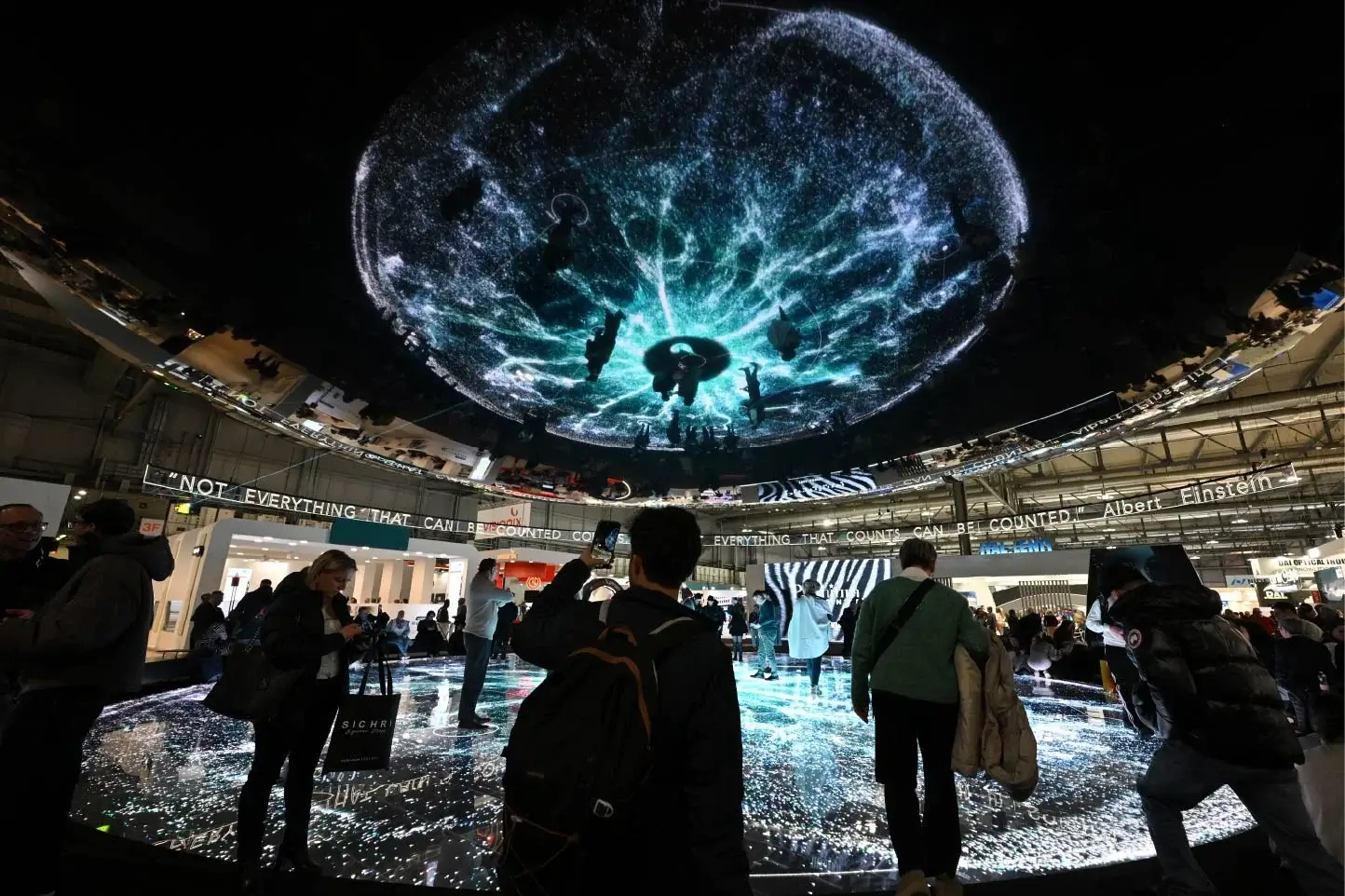
MIDO 2025 proved to be an outstanding success, reaffirming its status as the world’s premier eyewear fair. Spanning 8 exhibit areas across 7 pavilions, the event hosted 1,200 exhibitors – 930 of them international – from more than 50 countries. It attracted 42,000 visitors from 168 nations.
Over the three days, MIDO 2025 also welcomed more than 16,000 exhibitor attendees, including stand staff, company employees, agents, representatives, and distributors. This figure further highlights the show’s exceptional appeal and, perhaps more than ever, reinforces its position as the industry’s unrivaled leader.
Beyond numbers, what stood out was the atmosphere, optimistic, innovative, and open.
In 2026, you can expect a few changes. MIDO evolves every year, and has done so for more than 50 years, by listening to the needs of all its stakeholders and continuously striving to improve. As soon as one edition ends, we’re already thinking about the next! So there will certainly be new elements, including changes among exhibitors (returns, debuts, expansions, etc.), along with key confirmations such as the exhibition areas, the pavilions, and all the tools designed to help visitors get the most out of the show. To continue to be the global benchmark we have become, we must continue to evolve and offer an experience that amazes and astonishes, without compromising on functionality. For this reason, the new edition will, as always, be a unique showcase: the entire eyewear supply chain will be represented in all the exhibition areas. Exhibitors and visitors can look forward to a dynamic, international, and strongly business-oriented event, with numerous opportunities for networking, meetings, and discussions throughout the three days of the show.
6. Balancing Technology and Human Creativity
Last year, you emphasized the importance of the “human side” after an AI-focused campaign. How is that balance evolving?
Lorraine Berton
Technology continues to support creativity, but it should never replace it. AI helps us optimize logistics and personalize products, but the soul of eyewear is human. MIDO anticipated the paramount need of refocusing on humans, reminding the industry that the ultimate value in eyewear lies with the human being (creator, wearer, observer) not just the technology, the material or the machine. It’s a call to re-centre the human experience, human creativity and human connections in a time of accelerating tech and automation.
At MIDO, we’ve seen a clear trend: people are rediscovering high quality craftsmanship, emotional design, and storytelling. Consumers want authenticity; they want to feel the human touch behind every frame. Technology should empower that, not erase it.
7. Sustainability and Regulation
Sustainability has moved from trend to necessity. How are ANFAO and MIDO helping the industry adapt?
Lorraine Berton
Indeed, sustainability today is both an ethical and regulatory imperative. ANFAO would like to work with EU institutions on eco-design and circular economy standards, particularly regarding materials and packaging.
The Italian industry is leading the change with investments in bio-acetates, traceability systems, and low-impact production. We have dedicated great attention to the Certified Sustainable Eyewear (CSE) certification for sustainability in eyewear products, developed together with Certottica, which rewards companies that truly embed ESG principles into their strategies, and especially we are working to increase the participation of producers.
In addition, together with Deloitte Climate and Sustainability we worked on a program to introduce small and medium-sized companies to sustainability reporting and ESG issues.
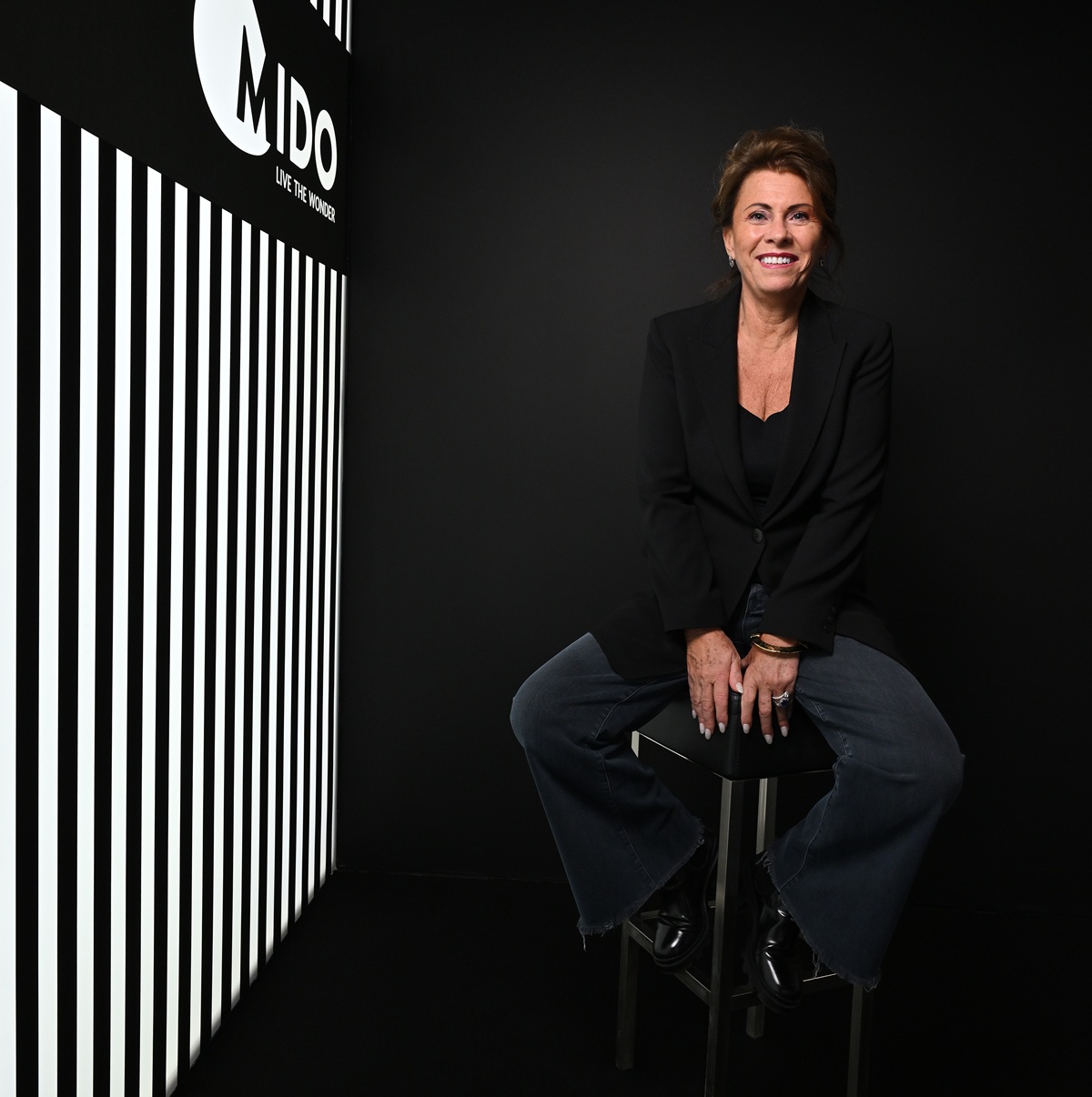
8. Women’s Leadership and Industry Renewal
As the first woman to lead both ANFAO and MIDO, what changes have you brought to leadership culture?
Lorraine Berton
Leadership today must be inclusive and empowering. I’ve worked to create mentorship paths for young professionals and women within both ANFAO and MIDO. We’ve increased female participation in our working groups and promoted a culture of openness and collaboration.
I believe leadership is not just about decisions: it’s about trust, empathy, and perseverance. These values are essential, especially in uncertain times. And they help attract a new generation of leaders to our sector.
And especially a conscious and inclusive leadership, attentive to the power of language, is at the heart of our commitment. Thanks to the presentation of the “Manifesto for Inclusive Language,” we have paved the way for promoting respectful and equitable communication in the eyewear industry. We recently launched the “Walk the Talk” project, a new free training course promoted by ANFAO in collaboration with Tack TMI, born from the experience of stimulating the conscious adoption of inclusive behaviors in member companies, which is proving very successful and of which we are very proud.
9. The Future of Eyewear: Design, Technology, and Meaning
What innovations or trends excite you most as you look ahead?
Lorraine Berton
What excites me most is the renewed focus on what truly defines eyewear: design, craftsmanship, and authenticity. I see a strong return to products that tell a story and express real individuality. Included those tailored made or personalized.
I’m also very inspired by the progress in responsible production. This is no longer a trend, it’s a concrete commitment that our companies are embracing with great seriousness.
Of course, innovation has a role, but always when it is at the service of people: technologies that improve comfort, vision quality, or durability, without changing the soul of the product.
And what makes me most optimistic is the growing global recognition of the human touch behind our work: the know-how, creativity, and sensitivity that make eyewear unique. This, I believe, is where the future truly begins.
10. Message to the Canadian Optical Community
Finally, what message would you like to share with our Canadian readers?
Lorraine Berton
Of course, I warmly invite all Canadian professionals to join us in Milano for MIDO 2026, where the best of international and Italian eyewear will meet in a unique celebration of vision and beauty. We can build the future together, with passion, purpose, and partnership. The world is changing rapidly, but we can evolve without compromising quality, ethics, or creativity. Canada has always shared a deep connection with Italian excellence. Let’s continue to innovate, educate, and inspire, together!
We look forward to seeing you in Milano from January 31st to February 2nd where you will be experiencing the best of international eyewear, and the special energy of a city that will be in the global spotlight during the first month of 2026!